
Melinda Piechoski, RN · Director of Nursing · May 2026
Most family caregivers do not set out to take on more than they can handle. It happens gradually. One task becomes five. Weekday visits become weekends. Phone check-ins become overnight stays. By the time a family recognizes that they need professional help, they have often been in crisis mode for months.
This guide is not about convincing anyone to walk away from a loved one. It is about recognizing the signs that professional home care has stopped being optional and become necessary, both for your loved one and for you.
Why This Transition Is Hard to See
Family caregivers adapt. That is both their strength and the reason this transition gets delayed. Each new responsibility feels manageable on its own. The cumulative load only becomes visible when something breaks: the caregiver gets sick, the loved one falls, or a family member finally admits they cannot keep going at this pace.
There is also the emotional weight of the decision. Bringing in professional help can feel like giving up, like admitting you are not enough. It is not. It is recognizing that professional caregivers, trained specifically for this work, can provide a level of consistent support that family members cannot sustain alongside jobs, children, and their own health needs.
Physical Signs in Your Loved One
Watch for changes in your loved one’s physical condition that signal care needs have exceeded what informal caregiving can safely manage.
- Unexplained weight loss or signs of dehydration. These are among the most telling signs of inadequate nutrition and hydration monitoring. They often develop slowly and are easy to miss without regular trained observation.
- Skin breakdown or pressure sores. Pressure injuries develop when someone is not being repositioned regularly. They are preventable with proper care and indicate that existing help is not sufficient.
- Frequent falls or near-falls. One fall is a warning. Repeated falls with no change in care approach is a signal that the current setup cannot maintain safety. Our companion care team is trained in fall prevention and environmental modification.
- Missed medications or incorrect dosing. Medication errors are common when family caregivers manage complex medication schedules without clinical training. A missed dose of a blood thinner or a doubled anticoagulant can be dangerous.
- Worsening hygiene. Resistance to bathing, unchanged clothing, or visible decline in personal hygiene are signs that someone needs consistent, patient daily personal care assistance beyond what family visits provide.
- New or worsening confusion at night. Nighttime confusion and wandering are common in dementia and represent a real safety risk, especially when no one is present overnight.
Signs That Family Caregiving Is Reaching Its Limits
The signs in the caregiver are just as important as the signs in the person receiving care.
- You have stopped sleeping consistently. Night anxiety about your loved one, calls in the middle of the night, or overnight stays that leave you exhausted at work are not sustainable patterns.
- You have reduced or stopped working to manage care. A temporary adjustment for a short recovery is different from a long-term arrangement that puts your financial security at risk.
- You are canceling your own medical appointments. When a caregiver starts ignoring their own health to manage someone else’s, the cascade effect typically ends badly for both people.
- You feel resentment, and then guilt about the resentment. Caregiver resentment is not a character flaw. It is a normal response to carrying more than any one person can sustainably carry. It is also a reliable sign that the arrangement has exceeded its limits.
- Other family members have stepped back. When the responsibility is carried by one person and others have gradually disengaged, the remaining caregiver is typically carrying a full professional workload without professional support.
When Safety Becomes the Primary Concern
Some situations make professional care urgent rather than optional.
- Your loved one has been diagnosed with moderate-to-advanced dementia and is home alone for any period of the day.
- There has been a recent hospitalization or emergency room visit related to a fall, medication problem, or functional decline.
- Your loved one has expressed thoughts of self-harm or shows signs of severe depression in isolation.
- You have identified fire, flooding, or other home hazards that your loved one cannot manage safely without supervision.
- Your loved one has physical care needs, such as wound care, catheter management, or skilled nursing oversight, that exceed what family members are trained or licensed to provide.
These situations call for professional support, not as a supplement to family care, but as the primary care structure. Our personal care and 24-hour home care teams are built for exactly these situations.
What Professional Home Care Actually Looks Like
Many families delay because they have a vague idea of professional care that does not match the reality. Home care is not a nursing home. Your loved one stays home. Their routines, their belongings, and their community stay intact.
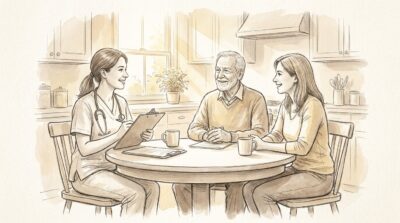
A professional caregiver arrives at scheduled times and handles the specific tasks that are straining your family: bathing, dressing, meals, medication reminders, light housekeeping, transportation to appointments, and companionship. A-Team caregivers are W-2 employees, background-checked through all three Pennsylvania clearances, and supervised by a Director of Nursing.
Family members remain deeply involved. The difference is that you are no longer the primary safety net. You get to be a son, daughter, or spouse again rather than a full-time caregiver.
Taking the First Step
The first step is a phone call. A coordinator will ask about your loved one’s situation, explain what services are available, and help you understand the funding options, including Medicare, Medicaid, Community HealthChoices, and private pay.
You do not have to have everything figured out before you call. Most families who call A-Team at (215) 490-9994 are at the point of acknowledging they need help, not at the point of having a plan. That is fine. Getting the information is the plan.
Frequently Asked Questions
Will bringing in professional care mean my loved one loses independence?
The opposite is more often true. Professional home care supports independence by enabling your loved one to stay home safely. Declining to get help when care needs have escalated is more likely to result in a facility placement than getting timely professional support in place.
How do I talk to my loved one about accepting professional help?
Focus on their goals, not the tasks. Most people want to stay home. Frame professional care as the tool that makes that possible. It can also help to involve their physician, who may carry more credibility on the topic than a family member.
What if my loved one refuses home care?
Refusal is common, especially in early dementia or when a person is in denial about their limitations. A coordinator can advise on how other families have navigated this. In some cases, starting with a small amount of companion care can ease the transition. The relationship with the caregiver often shifts a person’s initial resistance over time.
Can family members still be involved after professional care starts?
Absolutely. Professional home care is meant to support the family, not replace it. Most families find that after a caregiver is placed, they are able to spend more meaningful time with their loved one because the logistics of care are handled by someone else.