

Quick answer: Community HealthChoices (CHC) is Pennsylvania’s Medicaid managed care program for adults 21 and older who are enrolled in both Medicare and Medicaid, or who qualify for Medicaid long-term services and supports because they need a nursing facility level of care. Once a family member is enrolled and passes a needs assessment, a CHC plan authorizes personal care, home health aides, and other in-home services.
If you have an older parent or a family member with a disability living at home, you have probably wondered how to pay for the help they need. Personal care, companion visits, and hands-on assistance with daily routines add up quickly. Many Pennsylvania families do not realize that a state Medicaid program called Community HealthChoices may cover a meaningful portion of those costs, sometimes all of them, without requiring the family to spend down savings first.
This guide explains how Community HealthChoices works, who qualifies, how to start the enrollment process, and how a licensed home care agency like A-Team Home Care can step in once coverage is in place. We have tried to keep the language plain and the steps clear so you can take action today rather than spending hours on hold with state agencies.
If you are still sorting out the difference between Medicare and Medicaid before reading further, our overview of Medicare vs. Medicaid home care in Pennsylvania is a good place to start.

What Is Community HealthChoices?
Community HealthChoices, commonly called CHC, is Pennsylvania’s managed care program for Medical Assistance (Medicaid) recipients age 21 or older who are enrolled in both Medicare and Medicaid, or who qualify for Medicaid long-term services and supports because they need a nursing facility level of care. The program replaced the older Fee-for-Service Medicaid model in most of Pennsylvania and folded in the previous OBRA waiver services. Rather than billing the state directly for each individual service, approved managed care organizations, called CHC-MCOs, coordinate a member’s full range of long-term services and supports.
The central goal of CHC is to help people stay in their own homes and communities instead of moving into a nursing facility. The program pays for services that make that possible, including personal assistance, home health aides, adult day services, assistive devices, and more. It is administered by the Pennsylvania Department of Human Services.
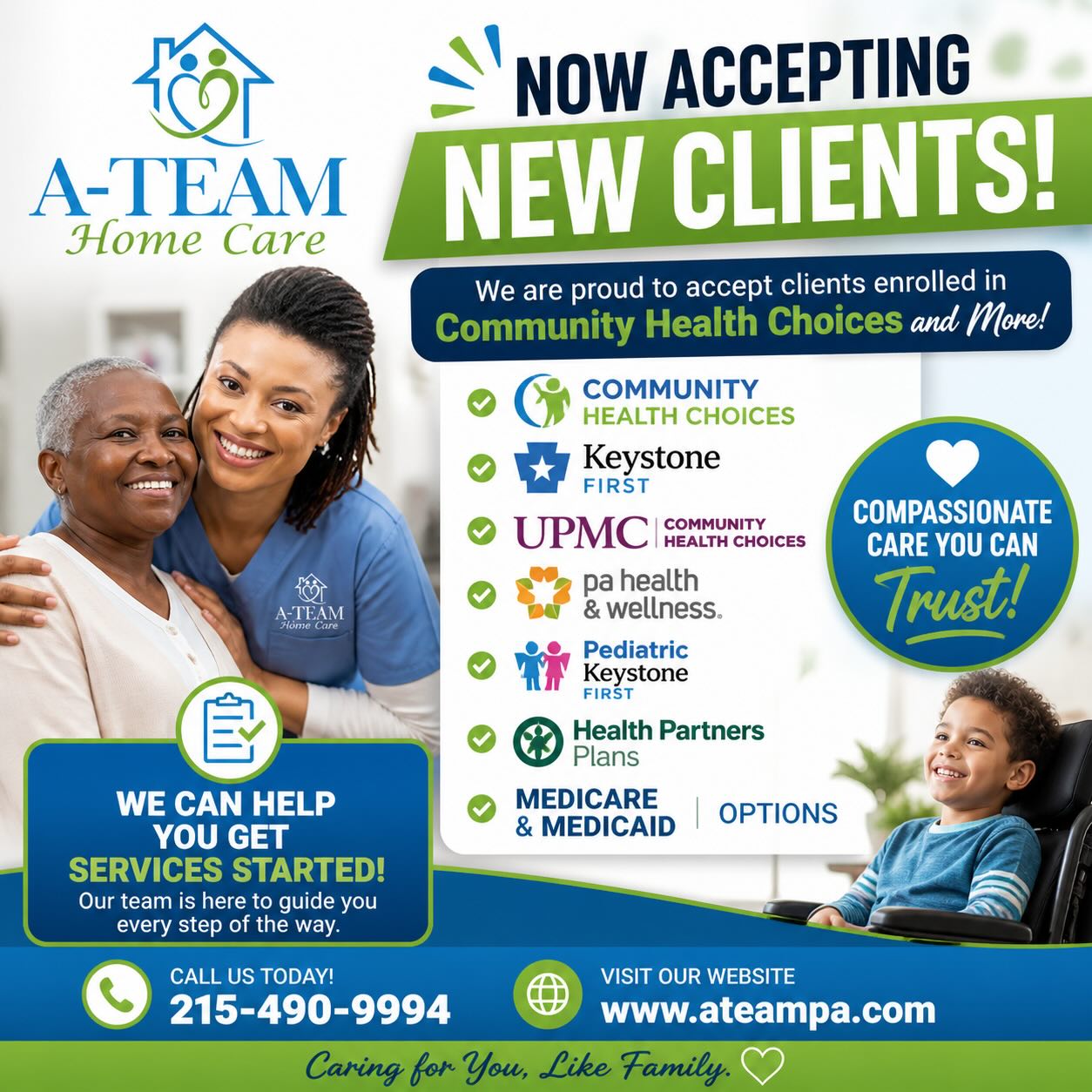
Community HealthChoices operates through three managed care plans across different regions of Pennsylvania: Keystone First, UPMC Community HealthChoices (UPMC CHC), and PA Health & Wellness. Depending on where your family member lives, the assigned plan will be different, but the core benefits and enrollment rights are the same.
Who Qualifies for Community HealthChoices?
To be eligible for CHC, a person generally needs to meet all of the following criteria:
- They must be enrolled in Pennsylvania Medicaid (Medical Assistance).
- They must be age 21 or older and either enrolled in both Medicare and Medicaid, or eligible for Medicaid long-term services and supports because they need a nursing facility level of care.
- They must live in the community, meaning they are not currently residing in a nursing facility as a long-term resident, though the program can help people transition out of a facility and back home.
- They must meet a clinical level of care that would otherwise qualify them for nursing facility placement. This is determined through a standardized assessment, not through family judgment alone.
Income and asset limits apply because CHC is a Medicaid benefit. However, Pennsylvania does allow spend-down and certain financial planning strategies that can help people who are slightly over the income threshold. Consulting with a Pennsylvania elder law attorney is the most reliable way to understand the financial eligibility side of things.
It is also worth knowing that CHC does not require a person to already be in crisis. Families who start the process early, before a hospitalization or fall makes everything urgent, tend to have a much easier time getting the right services in place.
What Services Does CHC Cover at Home?
Once a person is enrolled and their Service Coordinator has completed a needs assessment, CHC can authorize a wide range of home and community-based services. The exact services approved depend on the individual’s plan of care, but common covered services include:
- Personal assistance services: help with bathing, dressing, grooming, toileting, and mobility
- Homemaker services: light housekeeping, laundry, and meal preparation tied to the member’s disability-related needs
- Home health services: skilled nursing visits, physical therapy, occupational therapy, and speech therapy when medically necessary
- Assistive technology and home modifications: grab bars, ramps, and equipment to make the home safer
- Transportation to medical appointments
- Respite care for family caregivers
- Adult day services as an alternative or supplement to in-home care
For families weighing whether in-home care or an adult day program is the better fit, our comparison of adult day services vs. in-home care under PA Medicaid walks through the tradeoffs in detail.
It is important to understand that CHC does not automatically authorize unlimited hours. The plan of care is based on the assessed needs of the individual. Families who feel the authorized hours are not sufficient have the right to appeal or request a reassessment.
How to Enroll: A Step-by-Step Overview
The enrollment process can feel overwhelming, but breaking it into steps makes it more manageable.
Step 1: Apply for Medicaid. If your family member is not already enrolled in Pennsylvania Medical Assistance, the first step is applying through the COMPASS benefits portal or through your local County Assistance Office. You will need proof of income, residency, identity, and other documentation.
Step 2: Contact the Independent Enrollment Broker. Once someone is identified as potentially eligible for CHC, Pennsylvania uses an Independent Enrollment Broker (IEB) to help them choose a managed care plan. The IEB is a neutral party with no financial stake in which plan you choose. You can reach the IEB through the Pennsylvania CHC enrollment website.
Step 3: Choose a CHC-MCO. The three participating managed care organizations in Pennsylvania are Keystone First, UPMC Community HealthChoices (UPMC CHC), and PA Health & Wellness. Plan availability depends on the county. The IEB can walk you through which plans are available where your family member lives.
Step 4: Get assessed. After enrollment, the CHC-MCO assigns a Service Coordinator who will conduct a comprehensive assessment using a tool called the Functional Eligibility Determination, or FED. This assessment looks at what the person can and cannot do independently, their medical diagnoses, and their living situation.
Step 5: Develop a Person-Centered Service Plan. The Service Coordinator works with the participant and family to create a plan that identifies which services are needed and at what frequency. This plan is reviewed at least annually but can be updated any time there is a change in condition.
Step 6: Choose your provider. Once the plan is in place and hours are authorized, the participant can choose from any CHC-approved home care agency operating in their area. That is where A-Team Home Care comes in.
The Role of a Home Care Agency Under CHC
A CHC-approved home care agency provides the actual hands-on support that shows up in the participant’s plan of care. For personal assistance services, that means a trained caregiver coming to the home to help with activities of daily living such as bathing, dressing, meal preparation, and medication reminders.
A-Team Home Care serves Philadelphia, Bucks County, and surrounding Pennsylvania counties. Our caregivers provide companion care and personal care designed to help older adults and people with disabilities stay safely at home. We have been recognized with the Philadelphia Inquirer Philly Favorites, the Happening List, the Inc. 5000, and the Philadelphia100, which reflects our standing in the communities we serve rather than just our own claims about ourselves.
We understand what families are going through when a Service Coordinator calls to confirm a start date, or when hours need to be adjusted after a hospitalization. We work alongside Service Coordinators rather than creating extra friction for families who are already juggling a lot.
If you are not sure what to look for in a home care agency, our guide on how to choose a home care agency in Pennsylvania covers the questions every family should ask, including accreditation, caregiver screening, and backup coverage policies.
Self-Directed Services: Can a Family Member Get Paid as a Caregiver?
One feature of Community HealthChoices that surprises many families is the self-directed service option. Under self-direction, the CHC participant takes on an employer-like role, choosing who provides their care, which can in some cases include a family member. The participant works with a Fiscal Management Services (FMS) agency that handles payroll and employer taxes, so the logistics are manageable.
Self-direction is not the right fit for everyone. It requires the participant, or their representative, to stay engaged with scheduling, documentation, and communication with the FMS agency. But for families where a daughter, son, or other relative is already providing substantial unpaid care, it can be a way to compensate that caregiver through Medicaid funds.
Our dedicated guide on the Pennsylvania Community HealthChoices family caregiver pay guide goes deeper on eligibility, limitations, and how to get started with self-direction.
What CHC Does Not Cover and Where to Fill the Gaps
Community HealthChoices covers a lot, but there are situations where families need more support than the program authorizes. Authorized hours may not be enough to cover overnight care or round-the-clock supervision for someone with dementia or a fall risk. In those cases, families often supplement CHC services with privately paid home care hours.
For situations where a family member needs continuous supervision or care throughout the day and night, our 24-hour home care page explains how that kind of coverage works and what families should plan for.
It is also worth noting that Medicare can pay for short-term skilled nursing and therapy at home after a hospitalization or qualifying event, but Medicare does not pay for ongoing personal care or companionship the way CHC does. The two programs serve different purposes and often work together during a transition period. Our comparison of Medicare vs. Medicaid for home care in Pennsylvania explains how the two programs interact.
Veterans have a separate benefit worth knowing about. The VA Aid and Attendance benefit can help eligible veterans and surviving spouses pay for home care above and beyond what Medicaid covers. Our full guide is available at VA Aid and Attendance: a Pennsylvania veteran’s guide to free home care hours.
Signs It Is Time to Start the CHC Process
Families often wait longer than they should before looking into CHC, sometimes because the situation does not seem urgent yet, and sometimes because the enrollment process sounds complicated. But CHC is not a crisis program. It is designed to prevent crises by building a support system around a person before they end up in the emergency room or a skilled nursing facility.
Some signs that it may be time to explore CHC enrollment include:
- Your parent or family member is struggling with daily activities like bathing, dressing, or cooking independently
- You have noticed increased confusion, falls, or close calls at home
- Family members are burning out trying to provide care without outside support
- A doctor has raised concerns about the person’s safety living alone
- A recent hospitalization has left the person weaker than before
- The family is managing medications, appointments, and personal care across multiple unpaid caregivers
Our article on 8 signs your aging parent needs in-home care goes into more detail on what to watch for and how to start the conversation with a parent who may be resistant to accepting help.
Quality in a home care agency matters too. Our page on ACHC accreditation and what it means for home care explains why accreditation is one of the most meaningful signals of quality you can look for when choosing an agency under CHC or any other payer.
Frequently Asked Questions
How long does it take to get approved for Community HealthChoices?
The timeline varies depending on how quickly Medicaid eligibility is established and how soon the assessment can be scheduled. Medicaid eligibility determinations can take a number of weeks, and the full plan of care process after CHC enrollment can add additional time. Starting the application process before a crisis hits gives families the best chance of having services in place when they are needed. If your family member is being discharged from a hospital or nursing facility, the process can sometimes be expedited, so notify the CHC-MCO right away in that situation.
Can I choose any home care agency, or does CHC assign one to me?
Participant choice is a core principle of Community HealthChoices. Once your plan of care is approved and hours are authorized, you have the right to choose from any CHC-approved provider in your area. You are not required to use whoever the Service Coordinator happens to mention first. Take the time to compare agencies, ask about caregiver screening and training practices, and pick the one that feels right for your family member.
What happens if my family member’s needs increase after the plan is set?
If there is a significant change in your family member’s condition, such as a new diagnosis, a fall, or increased confusion, you can contact the Service Coordinator and request a reassessment. The Person-Centered Service Plan is not locked in for a year. It is meant to reflect actual needs, and the CHC-MCO is required to update it when circumstances change. Document any changes clearly and communicate them promptly so there is no gap in coverage.
Does Community HealthChoices cover care for someone with dementia?
Yes, dementia-related care needs can be addressed through CHC personal assistance and homemaker services, provided the person meets the overall eligibility criteria. The severity of cognitive impairment is factored into the functional assessment, and care plans can reflect the supervision and redirection needs that come with dementia. That said, CHC is not a memory care program specifically, and families with a member who has advanced dementia and high supervision needs may find they need additional private-pay or VA-funded hours on top of what CHC authorizes.
What if we disagree with the number of hours the CHC plan authorizes?
You have appeal rights. If you believe the authorized hours do not match your family member’s actual needs, you can request a grievance or appeal through the CHC-MCO. You can also ask your Service Coordinator to document additional needs and request a supervisor review. Keeping a written record of what daily care looks like, how long each task takes, and what happens when help is not available is useful evidence during an appeal. A Pennsylvania elder law attorney or disability rights advocate can also assist with the process if needed.
If you are ready to learn whether A-Team Home Care can serve your family under Community HealthChoices or through private pay, we are here to help. We serve Philadelphia, Bucks County, and the surrounding Pennsylvania counties, and we are used to meeting families right where they are in the process, whether that means you are just starting to explore Medicaid eligibility or you already have CHC hours authorized and need a caregiver ready to begin. Call us at (215) 490-9994 or use the form below, and we will walk you through the next steps together.
This article provides general guidance for Pennsylvania families. It is not legal, financial, or medical advice. Medicaid and VA eligibility rules change; verify current rules with the PA Department of Human Services or a qualified elder law attorney before acting.
Also From A-Team Home Care
Personal Care Companion Care 24-Hour Home Care Skilled Nursing Veterans Care Pediatric Care Philadelphia Home Care Bucks County Home Care