
Normal aging vs. early dementia
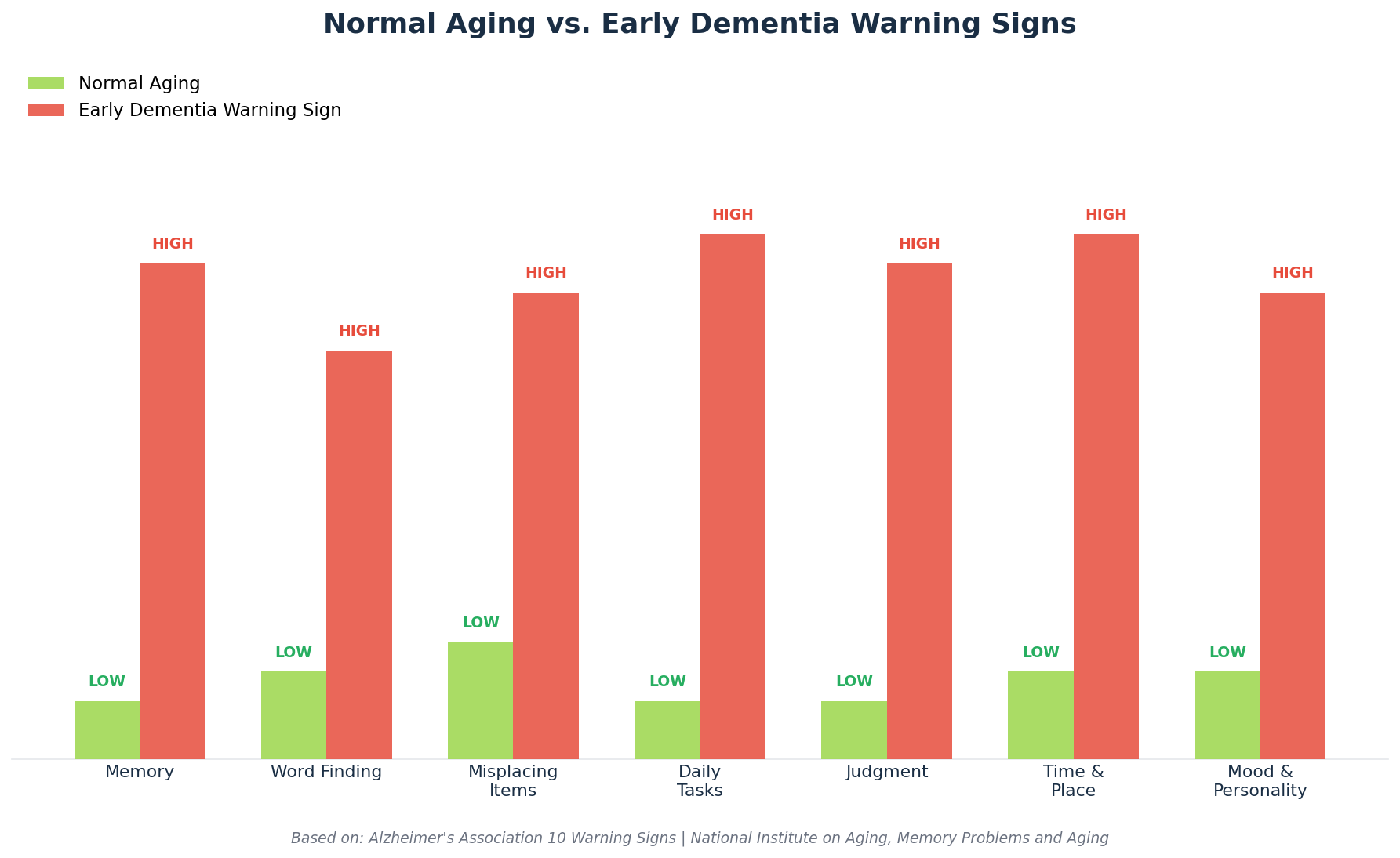
Some memory change is normal with age. The National Institute on Aging draws the line: forgetting a name and remembering it later is normal; forgetting recent events repeatedly and not retrieving them is concerning (NIA, Memory Problems, Forgetfulness, and Aging). Pausing to find a word is normal; substituting wrong words consistently in conversation is not. Misplacing keys is normal; putting keys in the freezer and not knowing how they got there is not.
The Alzheimer’s Association estimates more than 7 million Americans aged 65+ have Alzheimer’s, the most common cause of dementia, and that the number will more than double by 2060 (Alzheimer’s Association, Facts and Figures). Early diagnosis matters because some causes are reversible, treatments work better in early stages, and families have more time to plan.
The 10 early warning signs
The Alzheimer’s Association’s “10 Warning Signs and Symptoms” is the standard reference (Alzheimer’s Association, 10 Warning Signs):
1. Memory loss that disrupts daily life
Forgetting recently learned information, asking the same questions repeatedly, increasingly relying on memory aids and family members for things they used to handle. Normal aging: sometimes forgetting names and appointments but remembering them later.
2. Challenges in planning or solving problems
Difficulty following a familiar recipe, keeping track of monthly bills, or concentrating on tasks that involve numbers. Tasks take much longer than before. Normal aging: occasional errors balancing a checkbook.
3. Difficulty completing familiar tasks
Trouble driving to a familiar location, organizing a shopping list, or remembering rules of a favorite game. Normal aging: needing help with new technology like microwave settings or smartphone features.
4. Confusion with time or place
Losing track of dates, seasons, and the passage of time. Trouble understanding something not happening immediately. Forgetting where they are or how they got there. Normal aging: getting confused about the day of the week but figuring it out later.
5. Trouble understanding visual images and spatial relationships
Difficulty reading, judging distance, determining color or contrast. May not recognize their own reflection. Driving becomes difficult or unsafe. Normal aging: vision changes related to cataracts or other eye conditions.
6. New problems with words in speaking or writing
Trouble following or joining a conversation. May stop in the middle of a conversation, repeat themselves, or struggle with vocabulary — using “thing” or “what’s-its-name” repeatedly, or calling familiar objects by the wrong name. Normal aging: sometimes having trouble finding the right word.
7. Misplacing things and losing the ability to retrace steps
Putting things in unusual places. Cannot retrace steps to find them. May accuse others of stealing, especially as the disease progresses. Normal aging: misplacing things from time to time and retracing steps to find them.
8. Decreased or poor judgment
Changes in judgment or decision-making, especially around money — giving large sums to telemarketers, falling for scams, paying less attention to grooming or cleanliness. Normal aging: making a bad decision once in a while.
9. Withdrawal from work or social activities
Removing themselves from hobbies, social activities, work projects, or sports. May be avoiding social situations because of changes they have noticed. Normal aging: sometimes feeling weary of work, family, and social obligations.
10. Changes in mood and personality
Becoming confused, suspicious, depressed, fearful, or anxious. May be easily upset at home, with friends, or in unfamiliar places. Normal aging: developing specific ways of doing things and becoming irritable when routines are disrupted.
Other early signs to watch for
Beyond the Alzheimer’s Association’s 10 signs, families often notice these earlier:
- Driving incidents — new dings on the car, getting lost on familiar routes, missed stop signs.
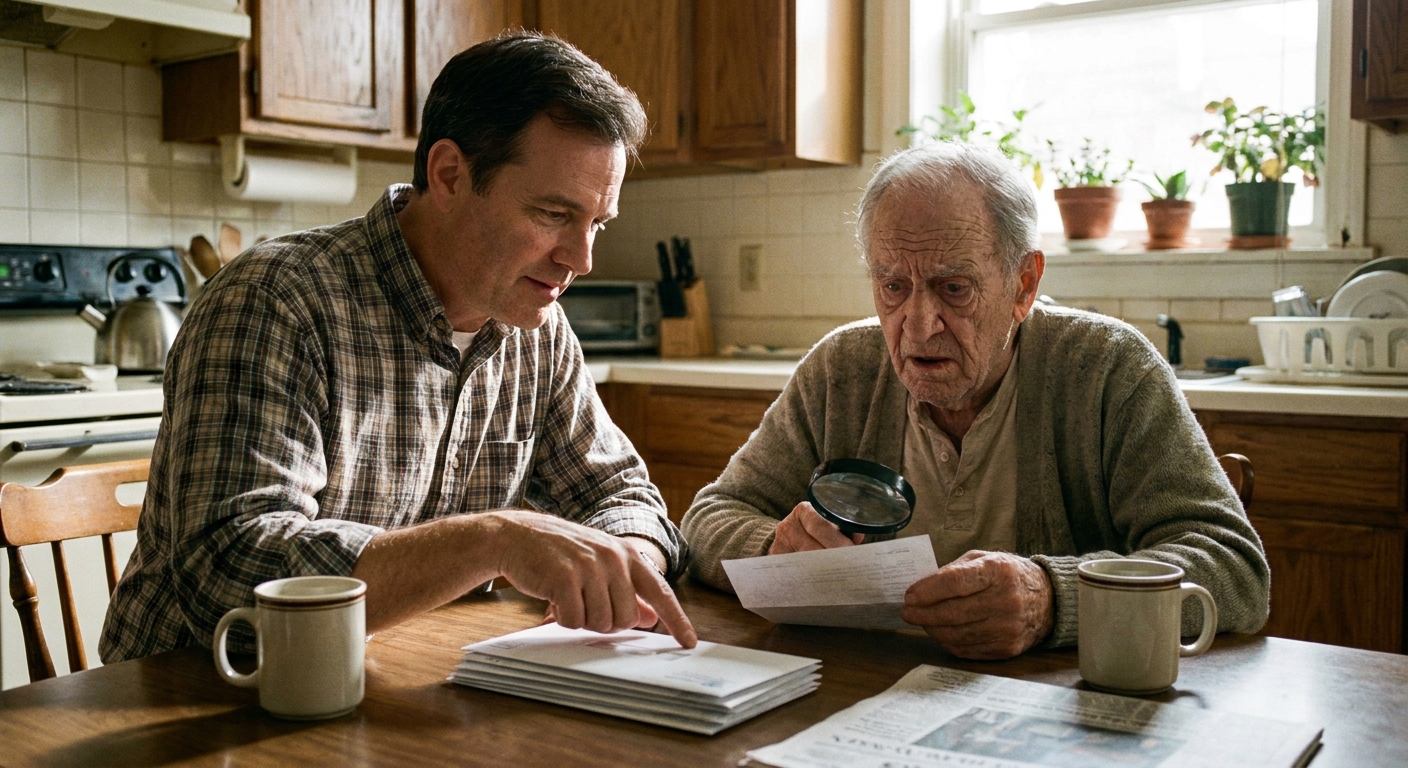
- Mail and bills piling up — previously organized, now stacks unopened.
- Medication errors — missed doses, doubled doses, expired bottles in the cabinet.
- Refrigerator changes — expired food, unusual items (mail in the fridge), missing staples.
- Subtle hygiene changes — same clothes worn for days, missed dental care, stains not noticed.
- Withdrawal from a hobby — stopped attending bridge club, no longer reading the newspaper, gave up cooking.
- Confusion on the phone — doesn’t recognize a grandchild’s voice, asks the same question multiple times in one call.
Possible reversible causes
Before assuming dementia, the National Institute on Aging notes several treatable conditions can mimic it (NIA, What is Dementia):
- Vitamin B12 deficiency — common in older adults, easily tested and treated
- Thyroid dysfunction — both hypothyroid and hyperthyroid can cause cognitive symptoms
- Depression — often presents as cognitive slowing in older adults
- Medications — benzodiazepines, anticholinergics, opioids, sleep aids all cause confusion
- Urinary tract infections — in seniors, often present as new confusion before fever
- Sleep apnea — chronic untreated sleep apnea causes cognitive impairment
- Normal pressure hydrocephalus — the classic triad is gait disturbance, urinary incontinence, and cognitive decline; treatable with shunt surgery
- Hearing loss — untreated, mimics cognitive decline and is a risk factor for dementia
This is why blood work and a thorough medical evaluation come first — not a presumption of Alzheimer’s.
What to do if you see warning signs
1. Document what you observe
Specific examples beat general impressions. “On April 15, Dad called me by my brother’s name” is more useful to the doctor than “Dad’s getting confused.” Keep a running note for 4–6 weeks before the appointment.
2. Schedule a primary care visit
Ask for a cognitive screen (Mini-Cog, MMSE, or MoCA), basic blood work (CBC, metabolic panel, B12, thyroid, vitamin D), and a depression screen. Bring the list of observations.
3. Request specialist referral
If the screen shows impairment, ask for a referral to a neurologist or geriatrician for full diagnosis. The National Institute of Neurological Disorders and Stroke notes that diagnosis often involves cognitive testing, brain imaging (MRI), and sometimes specialized scans like PET or lumbar puncture for biomarkers (NINDS, Dementia Information).
4. Have the legal-financial conversation early
Power of Attorney (financial and healthcare), Living Will, and Will updates need to happen while capacity is intact. Consult an elder law attorney about PA Power of Attorney for finances and healthcare decisions.
5. Build the support plan
Even early-stage dementia benefits from routines, social engagement, exercise, and the start of a respite habit for the primary caregiver. Companion care in early stages prevents isolation and provides family relief. A-Team’s Alzheimer’s and dementia care service is structured around stage-appropriate support.
Talking to your parent about your concerns
This is one of the hardest conversations adult children have. Approach principles:
- Choose a calm time, not a holiday or after a stressful event.
- Use specific examples, not character judgments.
- Frame it as an investigation, not a verdict (“Let’s get this checked out, it could be lots of things”).
- Offer to drive to the appointment.
- If the parent refuses, ask the primary care doctor to suggest a cognitive screen at the next visit on their own initiative.
- Some parents are more open to “memory testing” than “dementia evaluation” — the words matter.
When to bring in home care
Many families wait too long. Consider in-home support when:
- Bills, medications, or appointments are being missed
- Driving has become unsafe
- The senior is socially isolated
- The primary family caregiver is missing work or sleep
- Mealtime, bathing, or other daily routines have started slipping
For Philadelphia, Bucks County, and Montgomery County families, A-Team Home Care provides a free in-home assessment by an RN, written care plans, and matching with consistent dementia-trained caregivers. Two PA offices: Philadelphia and Feasterville. ACHC-accredited.
Call (215) 490-9994 or email service@ateampa.com.
Frequently asked questions
Is forgetting names a sign of dementia?
Not by itself. Occasionally forgetting names and remembering them later is normal aging. Repeatedly forgetting names of close family members, or forgetting and not retrieving the name even with cues, is more concerning — especially when paired with other warning signs.
How is dementia diagnosed?
Diagnosis usually involves a clinical history, cognitive testing (Mini-Cog, MMSE, MoCA), blood work to rule out reversible causes, and brain imaging (typically MRI). Specialists may use PET scans, lumbar puncture, or newer blood biomarkers in select cases. There is no single test — diagnosis is a clinical judgment supported by multiple data sources.
What’s the youngest age someone can get Alzheimer’s?
Younger-onset (early-onset) Alzheimer’s affects people under 65, sometimes as young as 40s and 50s. It accounts for less than 10% of cases. Symptoms are similar but often missed because Alzheimer’s is not expected at that age.
Can dementia be reversed?
Some causes of dementia-like symptoms can be reversed if treated early — B12 deficiency, thyroid issues, depression, certain medications, sleep apnea, normal pressure hydrocephalus. Once Alzheimer’s or other neurodegenerative dementia is diagnosed, current treatments may modestly slow progression but do not reverse the disease.
Should my parent get genetic testing for Alzheimer’s?
Routine genetic testing is not recommended for sporadic Alzheimer’s. APOE testing has limited predictive value and significant emotional implications. Testing for rarer familial forms (PSEN1, PSEN2, APP) may be considered when there is a strong family history of early-onset dementia. Discuss with a genetic counselor before testing.
If I see warning signs, how soon should I act?
Within 4–8 weeks of consistent observations. Early diagnosis allows time for legal-financial planning, treatment of reversible causes, and access to clinical trials and newer disease-modifying medications. Waiting often closes options.
What if my parent refuses to see a doctor?
Ask the primary care doctor to suggest a cognitive screen at the next visit on their own. Frame the visit as a routine check rather than dementia evaluation. Some seniors are more open after observing a friend’s decline. If safety is at risk (driving, finances, medications), an Adult Protective Services consultation through Pennsylvania DHS is a last-resort path.
Sources & further reading
- Alzheimer’s Association — 10 Warning Signs and Symptoms
- Alzheimer’s Association — Alzheimer’s Disease Facts and Figures
- National Institute on Aging — Memory Problems, Forgetfulness, and Aging
- National Institute on Aging — What is Dementia? Symptoms, Types, and Diagnosis
- National Institute of Neurological Disorders and Stroke — Dementia
Medical disclaimer
This article is for general educational purposes and does not replace medical advice. Cognitive concerns warrant a primary care visit and, when indicated, specialist evaluation. A-Team Home Care does not provide medical diagnosis.
Related guides in this series: