

Deciding to bring in outside help for an aging parent or spouse is rarely a single decision. It is usually a string of smaller ones: noticing the stove left on, watching a loved one struggle with the stairs, or feeling stretched too thin to keep up. Once a family calls a home care agency, the next step is almost always a first care assessment. If you have never been through one, this guide walks through what happens, who should be there, and how the visit turns into a written plan of care for families in Philadelphia, Bucks County, and the surrounding Pennsylvania counties.
Why the Care Assessment Comes Before Anything Else
A care assessment is the foundation of good home care. Before any caregiver is matched to a family, the agency needs to understand the person’s daily routine, physical and cognitive abilities, home environment, and medical needs. Skipping this step, or rushing it, leads to mismatched caregivers and care plans that miss what matters to the family.
At A-Team Home Care, we treat the assessment as the most important meeting in the whole relationship. It is not a sales visit. It is a chance to listen, ask questions, and get an honest picture of the support that is needed, so the care plan reflects real life instead of guesswork.
What Federal Rules Say About Assessment Timing
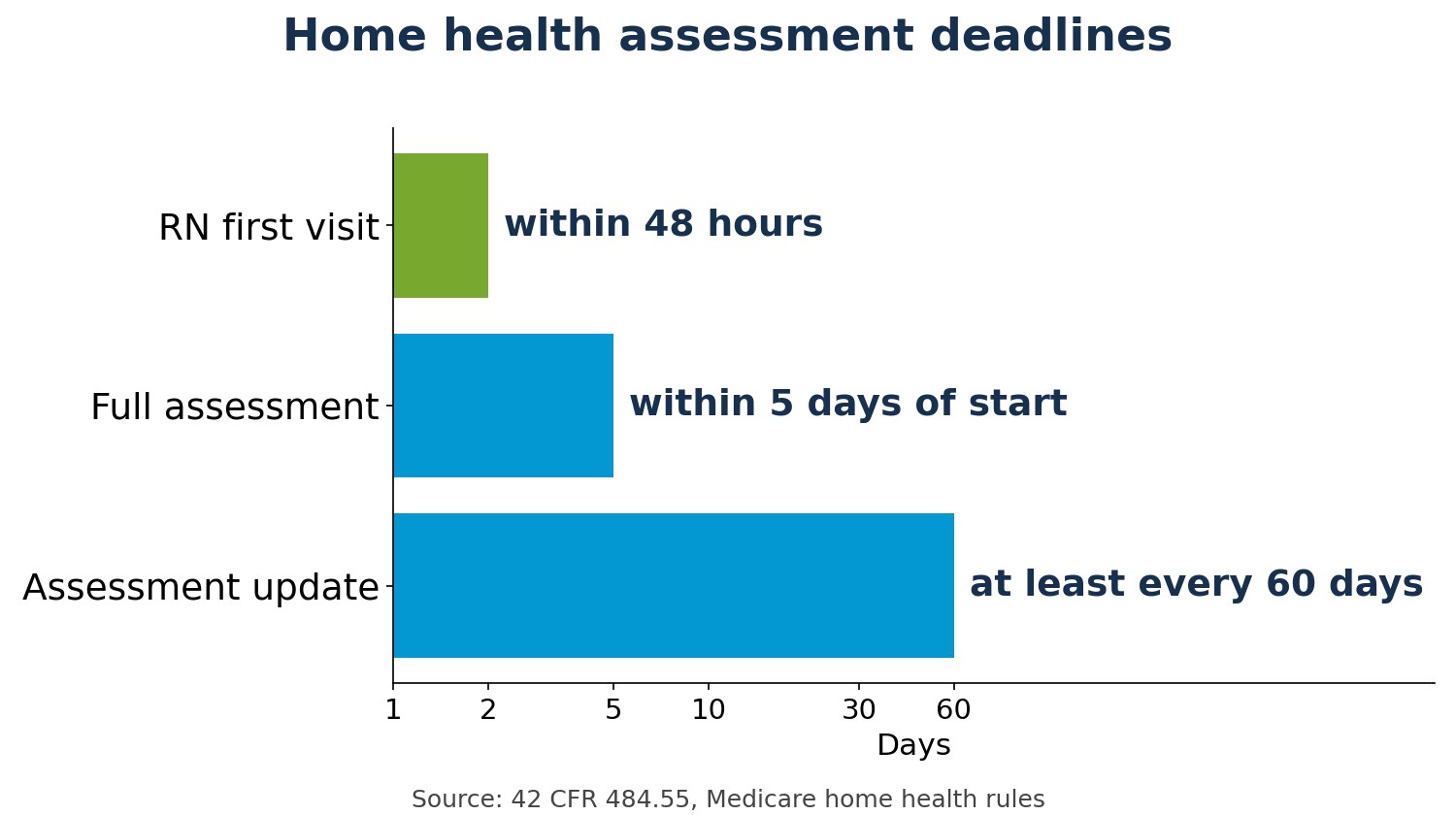
When care is Medicare-covered home health, the timing is not left to chance. Under 42 CFR 484.55, a registered nurse must conduct an initial assessment visit “within 48 hours of referral, or within 48 hours of the patient’s return home, or on the physician or allowed practitioner-ordered start of care date.” The comprehensive assessment must then be completed “no later than 5 calendar days after the start of care,” and it has to be updated at least in “the last 5 days of every 60 days” of care.
Private pay and non-medical home care follow the agency’s own intake steps, so ask your agency what its timeline looks like before the visit.
Before the Visit: What to Prepare
You do not need everything figured out before the assessment, but a little preparation makes the conversation more productive. Consider gathering:
- A list of current medications and the doctors involved in care
- Any recent hospital discharge paperwork or diagnoses
- A general sense of what a typical day looks like for your loved one
- Notes on recent falls, confusion, missed meals, or safety concerns
- Questions about scheduling, costs, and how care visits work
If you are still unsure whether home care is the right step at all, reviewing the signs your aging parent needs in-home care beforehand can help you put words to concerns you have noticed but not yet named.
Who Should Be Part of the Conversation
Whenever possible, the person who will receive care should be present, even if memory loss or another condition limits how much they can take part. Home care works best when it respects the wishes and dignity of the person at the center of it, not only the preferences of family members managing from a distance.
It also helps to have the primary family caregiver in the room, along with anyone else who shares day to day responsibility. If siblings disagree about next steps, the assessment is a good moment to get everyone on the same page, because the assessor can answer questions directly. Some families walk through an aging parent care decision tree together before or after the visit so the conversation stays grounded in specifics.
What the Assessor Looks At
A thorough care assessment covers more ground than most families expect. It typically includes:
- Physical ability: walking, moving from bed to chair, managing stairs, and personal care such as bathing and dressing
- Cognitive status: memory, orientation, judgment, and whether confusion shows up at certain times of day
- Home safety: lighting, clutter, bathroom hazards, rugs, and other fall risks
- Medical and medication needs: which conditions are being managed and whether medication reminders or coordination with a doctor are needed
- Nutrition and meals: whether meals are being skipped, prepared safely, or eaten at all
- Social and emotional wellbeing: isolation, mood changes, and how much contact the person has day to day
If memory concerns are part of the picture, the assessor will spend extra time understanding where the person is in the progression of the condition. Our guide on Alzheimer’s home care stage by stage covers how care needs shift over time, and our page on Alzheimer’s and dementia care explains the support available for cognitive conditions.
Questions Worth Asking During the Visit
A care assessment is a two-way conversation. Ask as many questions as you need, for example:
- How are caregivers matched to clients, and can we meet the caregiver before care starts?
- What happens if a scheduled caregiver is sick or unavailable?
- How does the care plan get updated as needs change?
- What does a typical visit include, and what is outside a caregiver’s role?
- How is care paid for, and are there benefits that could help cover the cost?
On that last point, veterans and surviving spouses may qualify for VA Aid and Attendance benefits, which can help pay for in-home care. A-Team Home Care helps families pursue VA Aid and Attendance for home care, so raise it during the assessment if military service is part of your family’s history. Families weighing home care against an adult day program can compare the two on our page about adult day services versus in-home care under PA Medicaid.
How the First Care Assessment Turns Into a Care Plan
Once the assessment is complete, the information becomes the basis for a written care plan. The plan sets out which tasks a caregiver will help with, how many hours of care are recommended (anywhere up to 24 hours per day, based on assessed need), and the goals the plan is working toward, such as fall prevention, medication reminders, companionship, or help with daily hygiene.
The care plan is not static. As needs change, gradually over months or suddenly after a hospital stay, the plan should be revisited. Some families start with a few hours of companion care a week and later move to more support, including 24 hour home care with rotating caregiver shifts. A good agency treats the care plan as a living document, not a form filed away once.
What Happens After the Assessment Visit
After the assessment, the agency follows up with a proposed care plan and a discussion of caregiver matching. This is the time to ask about a caregiver’s background, experience, and personality fit, because a good match matters as much as the tasks on the plan. It is also a fair time to ask how the agency is accredited, since accreditation reflects independent review of quality standards. Our page on what ACHC accreditation means for home care explains what to look for when comparing agencies, and our guide to choosing a home care agency in Pennsylvania includes questions to bring.
Once a caregiver is scheduled, most families find it helpful to be there for the first visit or two, to introduce the caregiver and make sure the plan works in daily life. From then on, regular communication between the family, the caregiver, and the agency keeps care on track.
Our Experience Guiding Families Through the First Assessment
A-Team Home Care has served families across Philadelphia, Bucks County, and the surrounding Pennsylvania counties since 2016. We have sat at kitchen tables with adult children juggling their own households while caring for a parent, spouses trying to keep a loved one safely at home, and veterans’ families working through benefits alongside care needs. That experience shapes how we run every assessment: listen first, then match care to the actual person, not a generic checklist. Families can see the care we provide on our Philadelphia home care and Bucks County home care pages. Our community recognition includes the Philadelphia Inquirer Philly Favorites, a Top 20 place on the Philadelphia100 in 2025, and Best of Bucks Senior Care on the 2025 Bucks Happening List.
Frequently Asked Questions
How long does a first care assessment take?
There is no single fixed length. It depends on how much medical history there is to review, how many family members join, and how many questions come up. When you schedule, ask how much time to set aside so nobody feels rushed.
Do I need a doctor’s referral to schedule a care assessment?
For private pay, non-medical home care, a family can call the agency directly. Medicare-covered home health is different: it starts from orders by a physician or other allowed practitioner, and federal rules then set the timing of the nurse’s first visit.
Will the person who does the assessment become the caregiver?
Usually not. For Medicare home health, federal rules require a registered nurse to conduct the initial assessment visit. The caregiver who provides day to day help is matched afterward, based on the care plan and on personality fit.
What if my loved one refuses to take part in the assessment?
This is common, especially with memory loss or when someone does not want help yet. A good assessor slows down, involves family members more directly, and comes back to the topic gently instead of forcing it.
Can the care plan change after the first assessment?
Yes. Care plans are meant to change as needs change. For Medicare home health, federal rules require the comprehensive assessment to be updated at least every 60 days and within 48 hours after a return home from a hospital stay of 24 hours or more.
If you are getting ready for a first care assessment, or still weighing whether it is the right time, A-Team Home Care can walk through it with you. Call (215) 490-9994 or contact our team to talk through your family’s situation and schedule an assessment.