

Melinda Piechoski, RN · Director of Nursing · Last updated May 5, 2026 · 11 min read
Medical and benefits disclaimer. This article is general educational information for Pennsylvania veterans and their families exploring home care funding. It is not legal, financial, or VA-accredited benefits advice. VA eligibility rules, dollar amounts, and asset limits change every year on December 1. Verify current rules with the U.S. Department of Veterans Affairs at va.gov, your county Veterans Affairs office, or the Pennsylvania Department of Military and Veterans Affairs. For a free in-home assessment, call A-Team Home Care at (215) 490-9994.
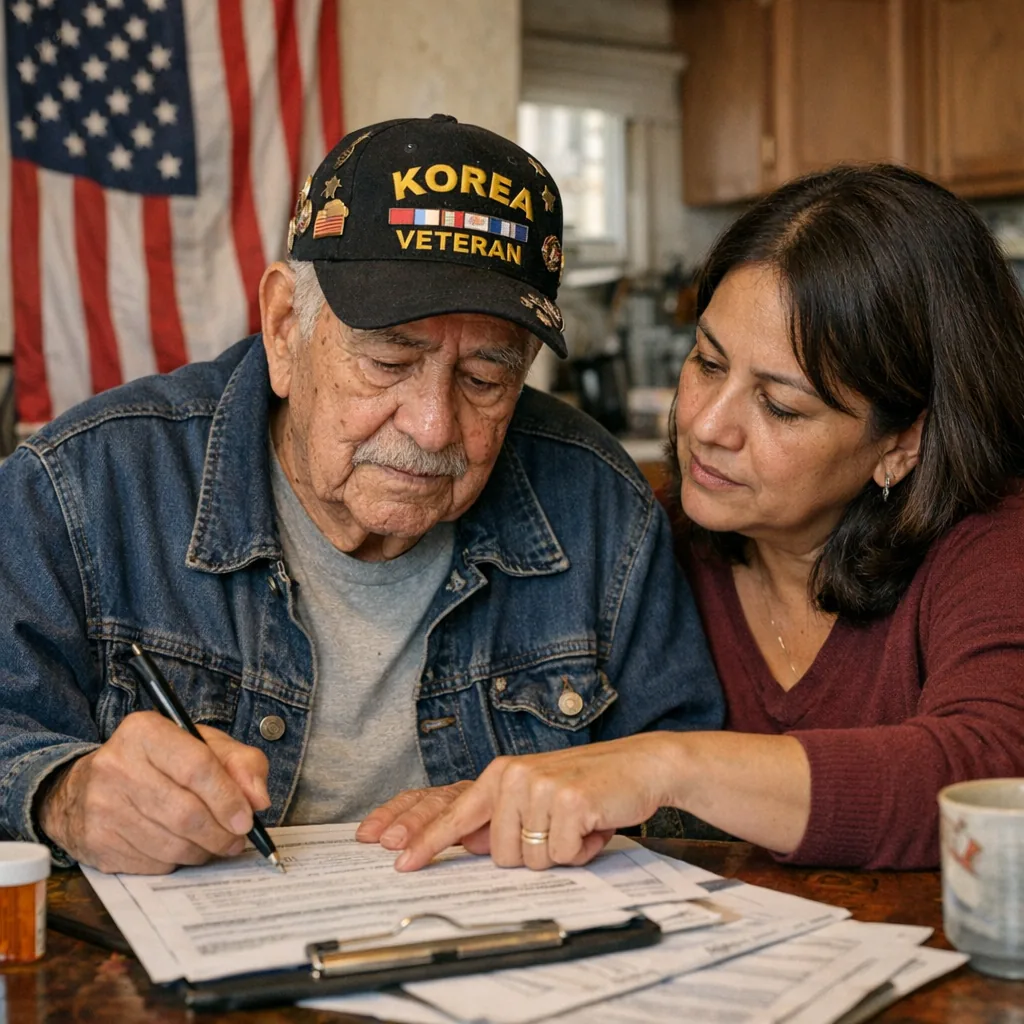
If your parent is a Pennsylvania veteran and you are looking at home care costs, the first thing you hear is usually VetAssist. VetAssist is a brand name — not a benefit. The actual benefits are VA Aid and Attendance, the VA pension, the VA Homemaker / Home Health Aide program, Veteran-Directed Care, the VA Caregiver Support Program (PCAFC), CHAMPVA, and a small set of Pennsylvania state programs. Most families qualify for more than one. Below is the full map — what each program pays, who qualifies, and how to start. A-Team Home Care provides veterans home care across southeastern Pennsylvania and helps families through every doorway.
The benefit families miss most: VA Aid and Attendance
Aid and Attendance (A&A) is an enhanced VA pension benefit for wartime veterans and surviving spouses who need help with activities of daily living (ADLs), are housebound, or are in a nursing home. The veteran (or surviving spouse) receives a monthly cash payment. They can use it for any purpose — including hiring an agency or family caregiver. Official page: va.gov/pension/aid-attendance-housebound.
Eligibility — four gates
- Wartime service: 90+ days of active duty with at least one day during a defined wartime era (WWII, Korea, Vietnam, Gulf War which includes August 1990 forward, post-9/11). Verify periods at va.gov.
- Discharge: Other than dishonorable.
- Net worth: Below the VA limit. Effective December 1, 2025 through November 30, 2026, the net worth limit is $163,699 [VA.gov verified 2026-05-05].
- Clinical need: Help with ADLs (bathing, feeding, dressing), staying in bed because of illness, being a nursing home resident due to disability, or qualifying vision limitation. Per va.gov.
2026 Maximum Annual Pension Rates (MAPR)
The VA publishes Maximum Annual Pension Rates each year on December 1. The figures below are effective December 1, 2025 through November 30, 2026 [VA.gov verified 2026-05-05]. Actual monthly payment depends on the veteran’s countable income and unreimbursed medical expenses.
- Single veteran, no dependents: Basic pension $17,441 / Housebound $21,313 / Aid and Attendance $29,093 per year (about $2,424/month).
- Veteran with one dependent: Basic $22,839 / Housebound $26,710 / Aid and Attendance $34,488 per year.
- Surviving spouse, no dependents: Basic Survivor Pension $11,699 / Housebound $14,300 / Aid and Attendance $18,679 per year (about $1,556/month) [VA.gov verified 2026-05-05].
Plan for a 6–12 month application timeline. Backdated payments cover the period from filing forward, so the financial benefit catches up.
VetAssist — what it actually is
VetAssist is a brand used by certain financial-planning firms that help veterans apply for Aid and Attendance. They are not the VA. Some are VA-accredited under 38 CFR 14.629; others have been the subject of complaints for fees or for steering veterans into annuity products. Be cautious about any organization that combines benefits help with investment sales.
The free, unbiased channels are: (1) your county Veterans Affairs office — every Pennsylvania county has one, and county Veterans Service Officers are VA-accredited; (2) the Pennsylvania Department of Military and Veterans Affairs at pa.gov/agencies/dmva; and (3) our companion guide on VetAssist and Aid and Attendance, which goes deeper on the application itself.
VA Homemaker / Home Health Aide program
The VA Homemaker / Home Health Aide (H/HHA) program is a Geriatrics and Extended Care benefit. The VA pays a contracted home care agency to provide support for veterans enrolled in VA health care. Unlike A&A, it is delivered as services, not cash. Program page: va.gov/geriatrics.
- Who qualifies: Veterans enrolled in VA health care with a documented clinical need for help with ADLs.
- What it pays for: Personal care, homemaker services, supervision — delivered by a contracted agency.
- Cost to veteran: May involve a small copay based on income and service-connected status. Many veterans pay nothing.
- How to start: Pennsylvania veterans served by Philadelphia VA Medical Center or Coatesville VA Medical Center should ask their VA primary care team for a Geriatrics consult.
Veteran-Directed Care
Veteran-Directed Care (VDC) is the VA’s self-directed program. The veteran receives a monthly budget and decides how to spend it — including hiring family members as paid caregivers. It runs alongside the H/HHA program and is jointly administered with state aging agencies. Pennsylvania veterans can ask their VA Geriatrics team or the Pennsylvania Department of Aging’s Office of Long-Term Living for a referral.
For Pennsylvania veterans dual-eligible for Medicaid, VDC may be combined with Pennsylvania Community HealthChoices (CHC), the Medicaid managed long-term care program. The three CHC managed care organizations are Keystone First Community HealthChoices, UPMC Community HealthChoices, and PA Health & Wellness — see dhs.pa.gov.
VA Caregiver Support Program (PCAFC)
The Program of Comprehensive Assistance for Family Caregivers (PCAFC) pays a monthly stipend directly to the primary family caregiver of an eligible veteran — not to the veteran. It also provides caregiver training, mental health counseling, and respite. Program page: va.gov/family-and-caregiver-benefits.
Veteran eligibility (PCAFC)
- Service-connected disability rated at 70% or higher (single rating or combined).
- Need for in-person personal care services for a minimum of six continuous months — either inability to perform ADLs, need for supervision due to neurological impairment, or need for regular instruction without which daily function would be seriously impaired.
- Care delivered at home, with ongoing VA primary-care team involvement.
How the stipend is calculated
PCAFC has two levels [caregiver.va.gov verified 2026-05-05]:
- Level 1: Monthly stipend = (OPM GS-4, step 1, annual rate for the veteran’s locality ÷ 12) × 0.625.
- Level 2: When the veteran is determined “unable to self-sustain in the community,” the stipend = (OPM GS-4, step 1, annual rate for the locality ÷ 12) × 1.00.
For Pennsylvania veterans in southeastern PA, the relevant locality is Philadelphia-Reading-Camden. For the current locality-specific stipend amount, use the calculator on the VA Caregiver Support page or call the VA Caregiver Support Line at 1-855-260-3274.
CHAMPVA — spouse and dependent coverage
The Civilian Health and Medical Program of the Department of Veterans Affairs (CHAMPVA) is health insurance for spouses, surviving spouses, and dependent children of certain veterans. Program page: va.gov/family-and-caregiver-benefits/health-and-disability/champva.
- Who qualifies: Spouse or dependent of a veteran who is permanently and totally disabled from a service-connected condition; or surviving spouse / dependent of a veteran who died from a service-connected disability or was rated permanently and totally disabled at the time of death.
- What it covers: Most medically necessary care — doctor visits, prescriptions, hospital services, mental health, lab and radiology. Coverage of skilled home health visits is typically secondary to Medicare for those eligible.
- What it does not cover: Long-term custodial home care (the kind A-Team provides for ADL support) is generally not a CHAMPVA benefit. CHAMPVA pairs well with private-pay home care or with Aid and Attendance for the surviving spouse.
Pennsylvania state programs
- Veterans Temporary Assistance (VTA): Direct grants to individual Pennsylvania veterans facing financial hardship — up to $1,600 per 12-month period — administered by the Pennsylvania DMVA. This is the state program that pays the veteran directly. Apply through your county Veterans Affairs office.
- Pennsylvania Veterans’ Trust Fund (VTF): Funds Veterans Service Organizations and county Veterans Affairs offices to deliver programs. The Trust Fund itself does not grant directly to individuals; it pays the organizations that help veterans. See VTF page.
- Pennsylvania State Veterans’ Homes: Pennsylvania operates six state veterans’ homes for residential long-term care — Erie, Hollidaysburg, Pittsburgh, Scranton, Spring City (Southeastern Veterans’ Center), and Philadelphia (Delaware Valley Veterans’ Home). Admission is needs-based; the homes are an alternative to home care, not a complement. Information at the PA DMVA.
- Real Estate Tax Exemption: Available to honorably discharged Pennsylvania veterans who are 100% permanently disabled from service-connected causes, with financial-need criteria. Frees up household cash that can pay for home care.
- PACE / PACENET: Pennsylvania’s prescription assistance program for older adults. Not veteran-specific, but stacks with VA benefits and reduces drug costs that would otherwise consume the A&A check.
How the benefits fit together — a simple decision tree
Most southeastern Pennsylvania families considering home care for a veteran end up in one of four patterns:
- Wartime veteran with limited income, not enrolled in VA health care: Apply for Aid and Attendance. Use the cash benefit to pay for home care. Get help free from a county Veterans Affairs office — not a VetAssist firm selling annuities.
- Veteran enrolled in VA health care with documented functional needs: Ask the VA primary care team for a Homemaker / Home Health Aide referral. The service is delivered by a contracted agency at little or no cost to the veteran.
- Veteran wanting to pay a family caregiver: If service-connected at 70%+, apply for PCAFC. Otherwise pursue Veteran-Directed Care or use Aid and Attendance dollars to hire a relative.
- Surviving spouse of a wartime veteran: Apply for Survivor Pension with Aid and Attendance. If the veteran died from a service-connected disability or was 100% P&T at death, also enroll in CHAMPVA.
For families that don’t know which path fits, A-Team Home Care offers a free in-home RN assessment that includes benefit-mapping. We don’t sell annuities and don’t charge for benefits guidance. Call (215) 490-9994.
How A-Team Home Care serves Pennsylvania veterans
A-Team Home Care provides veterans home care across Philadelphia, Bucks, Montgomery, Delaware, and Chester counties. We accept VA Homemaker / Home Health Aide authorizations, work with families using Aid and Attendance dollars, and coordinate with VA Geriatrics teams at the Philadelphia VA Medical Center and Coatesville VA Medical Center. The service lines veterans use most are personal care, companion care, 24-hour home care, and our Family Caregiver Program for spouses or adult children who provide hands-on care for a qualifying veteran.
- Aid and Attendance: Cash benefit added to VA Pension for wartime vets needing help with ADLs.
- Housebound: Cash benefit added to VA Pension for wartime vets confined to home.
- VA Homemaker / Home Health Aide: VA-paid agency care for enrolled veterans.
- Veteran-Directed Care: Self-directed budget; can hire family.
- PCAFC: Stipend to family caregiver of 70%+ rated veteran.
- CHAMPVA: Health insurance for spouses / survivors of qualifying veterans.
- U.S. Department of Veterans Affairs — cabinet-level federal department administering veterans benefits and health care.
- Wartime period — eligibility-defining service window for VA Pension and Aid and Attendance.
- Activities of daily living (ADLs) — bathing, dressing, eating, transferring, toileting, continence.
- Service connection — VA finding that a disability was caused or worsened by military service.
- Pennsylvania DMVA — state agency administering Pennsylvania veterans programs and the six state veterans’ homes.
Frequently asked questions
Is Aid and Attendance the same as a VA pension?
Aid and Attendance is an enhanced rate added to the basic VA pension for veterans or surviving spouses who need help with activities of daily living. You first qualify for VA pension based on service and income, then the A&A enhancement is added on top based on clinical need. The application is a single VA form filed through eBenefits or a county VA office.
What is the maximum monthly Aid and Attendance benefit in 2026?
For the period December 1, 2025 through November 30, 2026, the maximum annual A&A rate for a single veteran with no dependents is $29,093 per year (about $2,424 per month). For a veteran with one dependent the maximum is $34,488 per year. For a surviving spouse with no dependents the maximum is $18,679 per year (about $1,556 per month). Actual payment depends on countable income and unreimbursed medical expenses [VA.gov verified 2026-05-05].
Can a surviving spouse receive Aid and Attendance?
Yes. Survivor Pension with Aid and Attendance is available to surviving spouses of wartime veterans who meet income, asset, and clinical-need criteria. The amount is lower than the veteran benefit. A county Veterans Affairs office can help with the application at no cost.
Do I have to be in VA health care to use the Homemaker / Home Health Aide program?
Yes. The H/HHA program is a VA health care benefit, so the veteran must be enrolled. If your loved one is not yet enrolled, the first step is to apply for VA health care at va.gov or through a county VA office. Once enrolled, the VA primary care team can refer to Geriatrics for an H/HHA evaluation.
Can a family member be paid as a caregiver under VA programs?
In some cases. Veteran-Directed Care explicitly allows the veteran to hire family members. The Aid and Attendance benefit is paid to the veteran, who can use it to pay any caregiver. The PCAFC stipend is paid directly to the primary family caregiver of a veteran rated 70%+ service-connected with a six-month-or-longer personal-care need. Each program has different rules.
How long does an Aid and Attendance application take?
Plan for 6–12 months from filing to approval. Some applications are faster, especially with a complete medical evidence packet. Backdated payments cover the period from filing forward, so the financial benefit catches up. Bridge the gap with private pay, family resources, or other benefits.
What does the VA define as a wartime period?
Wartime periods include World War II, the Korean conflict, the Vietnam era (with specific in-country versus general dates), the Gulf War (which includes service from August 1990 to a date set by Congress), and post-9/11 service. The veteran must have at least 90 days of active duty, with at least one day during a wartime era. Verify the current list at va.gov.
What if the veteran has a service-connected disability?
Service-connected disability compensation is separate from VA Pension and from A&A. A veteran with a 100% service-connected rating may be eligible for additional Special Monthly Compensation if they need help with daily living. They may also receive priority for VA H/HHA services and may qualify for PCAFC stipends.
Where do I start if my parent is a Pennsylvania veteran and I think they need home care?
Three calls in this order: (1) the local county Veterans Affairs office — free and VA-accredited; (2) the veteran’s VA primary care team if enrolled; (3) A-Team Home Care at (215) 490-9994 for a free in-home RN assessment. We will not charge for benefits guidance.
Sources and further reading
- U.S. Department of Veterans Affairs — Aid and Attendance and Housebound benefits
- VA Pension — 2026 Veterans Pension Rates and Survivors Pension Rates
- VA Geriatrics and Extended Care — Homemaker and Home Health Aide Care
- VA Caregiver Support Program — PCAFC Stipend
- VA — CHAMPVA benefits
- Pennsylvania DMVA — Pennsylvania Department of Military and Veterans Affairs
- Pennsylvania DHS — Community HealthChoices
- A-Team Home Care — VetAssist and Aid and Attendance: a Pennsylvania veteran’s guide
- A-Team Home Care — Veterans home care services
Contact us
Talk to a Pennsylvania-based RN about your veteran’s home care — free, no annuity sales pitch.
If you are figuring out which VA or Pennsylvania benefit fits your loved one, A-Team Home Care can map the options with you on a single phone call. We are an ACHC-accredited home care agency serving Philadelphia, Bucks, Montgomery, Delaware, and Chester counties. Use the form below or call (215) 490-9994.
A-Team Home Care provides non-medical home care under Pennsylvania Department of Health licensure. Information on this page is general educational content and is not legal, tax, or VA-accredited benefits advice. Verify current rules with the U.S. Department of Veterans Affairs and the Pennsylvania DMVA.
Follow A-Team on Instagram
Real moments from real shifts — caregivers, clients, milestones, team events. @ateamhomecare · updated weekly.