

Melinda Piechoski, RN · Director of Nursing · Last updated May 5, 2026 · 12 min read
Medical disclaimer. This article provides general educational information about depression and loneliness in older adults. It is not medical advice and is not a substitute for diagnosis or treatment by a licensed clinician. If your loved one is in crisis, call 988. For care options specific to your family, call A-Team Home Care at (215) 490-9994 for a free RN assessment.
Why this matters more than most families realize
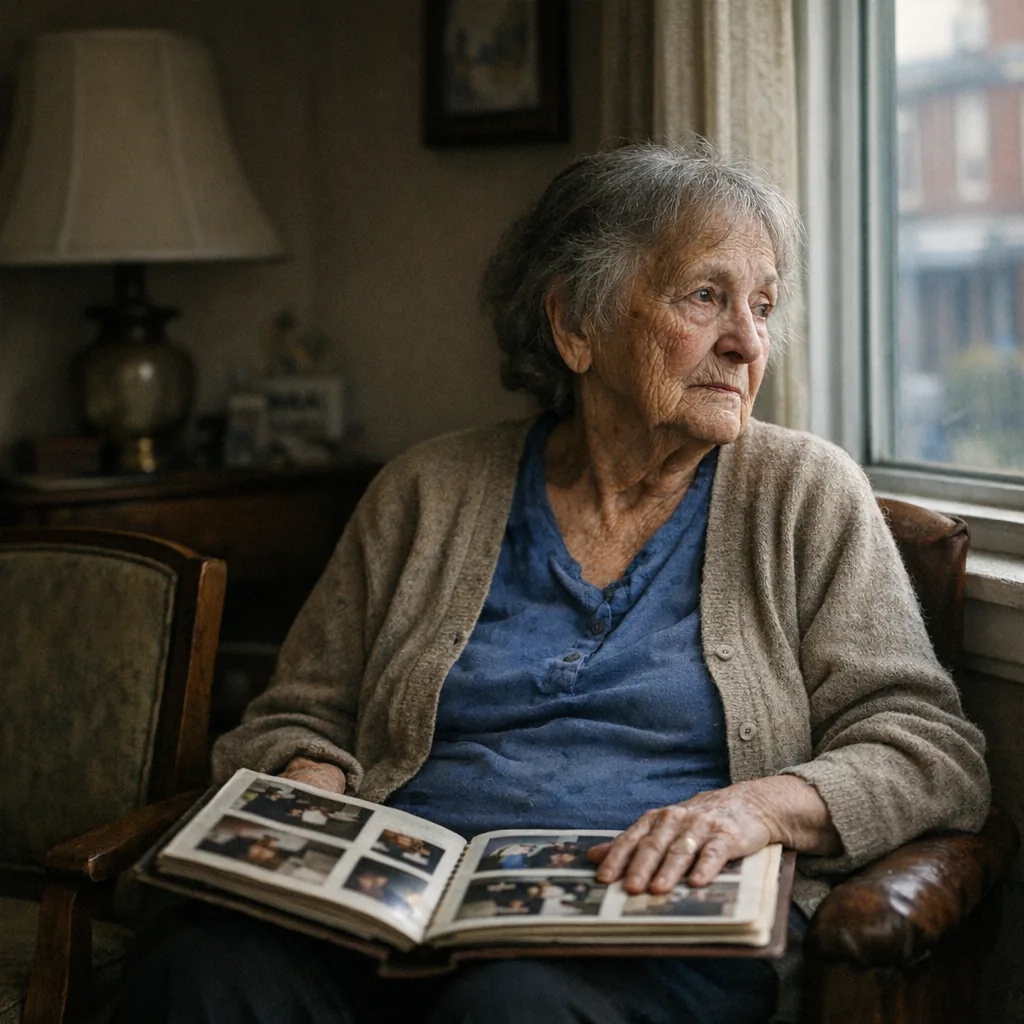
You noticed she stopped laughing at the things that used to make her laugh. She says she’s “just tired.” She doesn’t pick up on the second ring anymore. The TV is on but she isn’t watching it. You tell yourself she’s getting older. She is — and something else is happening too.
In 2023 the U.S. Surgeon General’s Advisory on Our Epidemic of Loneliness and Isolation declared social disconnection a public health crisis with mortality risk comparable to smoking 15 cigarettes a day. The CDC’s Social Connectedness program reports that older adults who are socially isolated have measurably higher rates of dementia, heart disease, stroke, and premature death. The National Institute on Aging notes older adults are at particular risk because retirement removes a daily social structure, friends die, hearing and vision loss reduce participation, and mobility declines shrink their world to one room. The AARP Foundation’s loneliness research documents that more than a third of adults 45+ report feeling lonely.
What you’re noticing isn’t her getting old. It is a warning. And it has a name.
The signs adult children miss
Older adults often do not say “I am depressed.” The current cohort of seniors grew up when mental illness carried real stigma. They describe fatigue, joint pain, headaches, indigestion, or sleep problems instead. The National Institute of Mental Health calls this somatic presentation — emotional distress translated into physical complaint. Watch for:
- Loss of interest in hobbies, foods, or routines they used to love — the puzzle book unopened, the garden gone to weeds, the daily phone call to her sister stopped
- Withdrawal from church, clubs, friends, family calls — and “I just didn’t feel like it” as the explanation
- Unexplained physical pain that imaging does not explain
- Sleep changes — early morning waking at 4 a.m., hypersomnia, or fragmented sleep
- Weight loss without dieting — clothes hang differently, the scale drops without intent
- Increased alcohol consumption — a third glass of wine where there used to be one
- Personal hygiene slipping — unwashed hair, the same blouse three days running, mail piling up
- Statements like “I’m just tired,” “I’m a burden,” “you’d be better off,” “I won’t be around much longer”
- Giving away meaningful possessions — the wedding ring, the family Bible, the watch she said she’d never part with
If three or more of these are present and have lasted more than two weeks, this is not aging. This is a clinical signal. Bring it up at the next primary care visit and ask for a depression screen.
The medical contributors you must rule out
Depression in older adults is rarely “just” depression. Several reversible medical issues mimic or trigger it. Treating the upstream cause often lifts the mood without an antidepressant ever being prescribed:
- Hypothyroidism. A simple TSH blood test catches this. Untreated low thyroid mimics depression cleanly — fatigue, low mood, weight change, slowed thinking.
- Vitamin B12 or vitamin D deficiency. Both common in older adults. Both produce fatigue and low mood. Both are easy to test for and easy to correct.
- Untreated pain. Chronic arthritis, back pain, or neuropathy that nobody is treating depresses anyone. Pain control is mood treatment.
- Hearing or vision loss. Both cause withdrawal that looks identical to depression. The grandparent who can’t hear the grandchildren laugh at the dinner table re-engages within days of getting hearing aids fitted.
- Medication side effects. Beta blockers, benzodiazepines, opioids, and corticosteroids can cause or worsen depression. Review the full medication list with the physician — see our guide to medication management for elderly parents for how to run that review.
- Alcohol. Older adults metabolize alcohol differently. Two drinks at 75 can hit like one drink at 50. Alcohol is a depressant. Quiet evening drinking is one of the most missed contributors to geriatric depression.
Ask the primary care physician for a Geriatric Depression Scale (GDS) or PHQ-9 screening at the next visit. Both take five minutes. The American Association for Geriatric Psychiatry (AAGP) recommends routine depression screening in older adults at every primary care touchpoint, especially after a major life event like the loss of a spouse, a hospitalization, or a move.
What actually works — the social prescription
Structured contact, not just visits
One unscheduled visit per month is not a treatment. Three predictable contacts per week — a Tuesday morning call, a Saturday lunch, a Wednesday visit from a home care aide — is. The brain responds to rhythm and predictability, not novelty. The reliability is the medicine.
Re-attach to a community
Pennsylvania has a network of senior community centers under each county’s Area Agency on Aging (AAA). Most offer free or low-cost congregate meals, exercise classes, and day programs. Loneliness drops sharply when an older adult has a place to go and people who notice when they don’t show up.
Treat the upstream sensory losses
Hearing aids and cataract surgery have measurable effects on depression scores. The grandparent who can hear the grandchildren laugh at the table re-engages in days, not months. If your parent has been “putting it off,” the cost of putting it off is her mood.
Movement
Physical activity has antidepressant effects in older adults comparable to first-line medications, per multiple NIH-funded trials. Even a 20-minute daily walk shifts mood. The activity does not have to be intense; it has to be consistent. A companion who walks with her three days a week will outperform a gym membership she never uses.
Companionship — the intervention families underestimate
The single intervention with the most consistent effect on loneliness is the simplest one: a reliable, kind, trained human being who shows up on a schedule. Not a stranger doing chores while she watches. Someone who sits with her, talks with her, eats with her, walks with her, and notices when something is wrong. That is what companion care is. It is not a luxury. It is the social prescription, delivered.
Companion care is the conversion of the social prescription into a real, scheduled, every-week thing
Families often hear “your mom needs more social interaction” and don’t know what to do with it. You can’t make her go to senior center bingo if she has decided she’s done with senior center bingo. You can’t move in with her and you can’t quit your job. The gap between the advice and the family’s life is where loneliness wins.
A trained companion caregiver from A-Team comes to her home on a fixed every-week schedule. Tuesday and Saturday at 11 a.m. for three hours, for example. She knows when the caregiver is coming. The caregiver knows what she likes — the puzzle, the morning coffee, the walk around the block, the call with the granddaughter on FaceTime. They eat lunch together. They go to the grocery store together. The caregiver notices that her hands tremble more this week than last, that she didn’t eat dinner last night, that the antidepressant bottle is still full from two weeks ago. The caregiver tells the office. The office tells the family. The problem gets caught at week two instead of at the ER.
This is not babysitting. This is a clinical intervention with a long evidence base. The CDC and the U.S. Surgeon General have called social isolation a public health risk on par with smoking. Consistent companionship is one of the few interventions with measurable effect on the outcome.
If the cost is the question — and it usually is — Pennsylvania’s Family Caregiver Program can pay an adult child or other family member to provide that companionship through Medicaid waivers. If your family wants to know whether you qualify, see the 7-step path to your first paycheck.
When to escalate — and how A-Team helps
Call A-Team Home Care at (215) 490-9994 if your parent is increasingly isolated, declining help, eating less, missing church or social events she used to attend, or showing the early signs above. Our companion care service is designed precisely for the loneliness problem — predictable visits, conversation, transportation, meals together, and a trained set of eyes that catches a problem early. For dementia patients where social withdrawal can be the first symptom, see Alzheimer’s and dementia care. For families combining companion support with hands-on assistance, see personal care. Not sure where your parent fits on the care spectrum? Read 8 signs your aging parent needs in-home care.
If your parent expresses suicidal thoughts, hopelessness, talk of “not being around,” or you find them giving away meaningful possessions — call 988 the same day, regardless of business hours. Older men, particularly those who are widowed and physically ill, have the highest suicide rate of any demographic in the U.S. The crisis line is staffed 24/7.
Depression and falls — a connection most families miss
Depression in older adults nearly doubles fall risk. The mechanism is straightforward: less physical activity, slower reaction time, medication side effects from antidepressants and sedatives, lower bone density from poor nutrition, and impaired attention from rumination. A depressed parent is a parent more likely to fall, and a fall hospitalization is one of the most common entry points into long-term decline. If you are noticing the loneliness and depression signs, this is the moment to also fall-proof her bathroom — see our bathroom fall prevention checklist. Fixing the social prescription and the home environment together is how you keep her independent.
The pandemic’s lingering effect on senior mental health
The COVID-19 pandemic isolated older adults more aggressively than any event in living memory. The CDC’s Social Connectedness research notes that social isolation among older adults rose sharply between 2020 and 2022 and has not fully returned to baseline. Many seniors stopped attending in-person services — church, community centers, fitness classes — and never restarted. The withdrawal becomes its own habit.
If your parent has not returned to a single in-person social activity since 2020, treat that as a finding, not a personality trait. The NIA’s tips for staying connected are a good starting framework — pick one activity, schedule it, and have someone (family or aide) accompany her the first three times until the rhythm sticks.
What the family should actually say
Adult children often want to ask “are you depressed?” — and the parent says “I’m fine” and the conversation ends. Better questions, drawn from the geriatric depression screening tradition:
- “Are you basically satisfied with your life right now?”
- “Have you dropped a lot of activities and interests?”
- “Do you feel that your life is empty?”
- “Do you often get bored?”
- “Are you in good spirits most of the time?”
- “Are you afraid that something bad is going to happen to you?”
- “Do you feel happy most of the time?”
- “Do you often feel helpless?”
These are adapted from the Geriatric Depression Scale (GDS) — Stanford, the standardized screening tool. A pattern of “no” answers to the positive questions and “yes” answers to the negative ones is a signal worth bringing to the physician. The PHQ-9 is the other commonly used screen and is appropriate when depression is suspected directly.
Topic resources
| Topic | Loneliness & depression in older adults |
| Region | Pennsylvania (Philadelphia + Bucks County) |
| Audience | Adult children of aging parents |
| Primary intervention | Companion care (scheduled, in-home) |
| Screening tools | Geriatric Depression Scale (GDS), PHQ-9 |
| Crisis line | 988 Suicide and Crisis Lifeline |
Frequently asked questions
How do I tell the difference between loneliness and depression in my elderly parent?
Loneliness is a feeling — the gap between desired and actual social connection. Depression is a clinical condition with persistent low mood, loss of interest, sleep and appetite changes, and sometimes hopelessness, lasting more than two weeks. Loneliness can lead to depression, but they are not the same. Both deserve attention. Persistent symptoms warrant a primary care or geriatric psychiatry evaluation.
Are antidepressants safe for older adults?
Most are. SSRIs like sertraline and escitalopram are commonly prescribed and generally well-tolerated in older adults. Some older antidepressants (tricyclics, paroxetine) are flagged on the AGS Beers Criteria as high-risk for older adults. The right choice depends on her other medications and conditions. Most evidence supports combining medication with talk therapy or behavioral activation rather than medication alone.
Can a home care aide really help with loneliness?
Yes — and the research is consistent. Companion care provides regular human contact: conversation, meals together, walks, transportation to social events, calls to family. The relationship itself is therapeutic. The CDC and HHS Surgeon General have called social isolation a public health risk; consistent companionship is one of the few interventions with measurable effect. A-Team companion care: (215) 490-9994.
What is the Surgeon General’s loneliness advisory?
In 2023 the U.S. Surgeon General Dr. Vivek Murthy issued an advisory naming social isolation and loneliness an epidemic with health effects comparable to smoking 15 cigarettes a day. The advisory cites research linking chronic loneliness to higher rates of heart disease, stroke, dementia, and premature death. The full advisory is published on the HHS website.
Will my parent admit she is depressed?
Often not. The current cohort of older adults grew up when mental illness carried stigma. They are more likely to describe physical symptoms — fatigue, aches, poor sleep, no appetite — than emotional ones. The PHQ-9 and Geriatric Depression Scale (GDS) are short screening tools the primary care office can administer in five minutes and are designed exactly for this generation.
What does Pennsylvania do for elderly mental health?
Pennsylvania’s Department of Human Services and the PA Department of Aging fund senior community centers, congregate meals, transportation programs, and Aging Waiver services that include behavioral health support. Each county has an Area Agency on Aging that connects seniors to local services. Medicare and Medicaid cover psychiatric visits and therapy with appropriate referrals.
Is grief after losing a spouse the same as depression?
Grief and depression overlap but are not identical. Bereavement after spousal loss commonly includes sadness, sleep disturbance, and reduced appetite for weeks to months — that is normal grief. Persistent hopelessness, suicidal thoughts, severe weight loss, or inability to function past 12 months suggests complicated grief or major depression layered on the loss. The NIA notes both deserve evaluation.
When should I worry my parent might be suicidal?
Older men, particularly those who are widowed and physically ill, have the highest suicide rate of any demographic in the U.S. according to CDC data. Warning signs include giving away meaningful possessions, sudden calm after a long depression, talk of being a burden, hoarding medications, and direct or indirect statements about wanting to die. Call 988 the same day, any time. The Lifeline is staffed 24/7.
Does companion care qualify under any Pennsylvania benefit programs?
Yes. Pennsylvania’s Community HealthChoices and Aging Waiver programs cover companion care under personal-assistance hours when there is a documented need. The same Medicaid waiver structure that pays family caregivers can also fund professional companion care visits. A-Team’s intake nurse can walk you through eligibility — (215) 490-9994.
Sources & further reading
- U.S. Surgeon General — Our Epidemic of Loneliness and Isolation (2023 Advisory)
- CDC — Social Connectedness
- National Institute on Aging — Loneliness and Social Isolation
- National Institute of Mental Health — Older Adults and Mental Health
- American Association for Geriatric Psychiatry — AAGP
- Stanford — Geriatric Depression Scale (GDS)
- AARP Foundation — Loneliness and Social Connection Research
- PA Department of Aging — Area Agencies on Aging
- 988 Suicide & Crisis Lifeline — 988lifeline.org
Talk to A-Team Home Care
If you’ve read this far, you know what you’ve been seeing. The next step is the easy one — a free phone call with our intake RN to talk through what your mom (or dad) is showing, what care options would help, and whether Pennsylvania benefits would pay for it. No pressure. No commitment. Just a clinician’s answer to a daughter’s question.
Call (215) 490-9994 — or fill out the form below and we will call you back the same business day.
Disclaimer. This article provides general educational information about depression and loneliness in older adults and is not medical advice. Mental health diagnosis and treatment require a licensed physician or therapist. If you or your loved one is in crisis, call 988 at any time. A-Team Home Care is an ACHC-accredited home care agency serving Pennsylvania.
Follow A-Team on Instagram
Real moments from real shifts — caregivers, clients, milestones, team events. @ateamhomecare · updated weekly.