

Melinda Piechoski, RN · Director of Nursing · Last updated May 5, 2026 · 10 min read
Disclaimer. This article provides general educational information for Pennsylvania families exploring paid family caregiving. It is not legal, financial, tax, or benefits-eligibility advice. For your situation, contact A-Team Home Care at (215) 490-9994 to start the inquiry, and consult an elder-law attorney for estate, Medicaid asset, or guardianship planning questions.
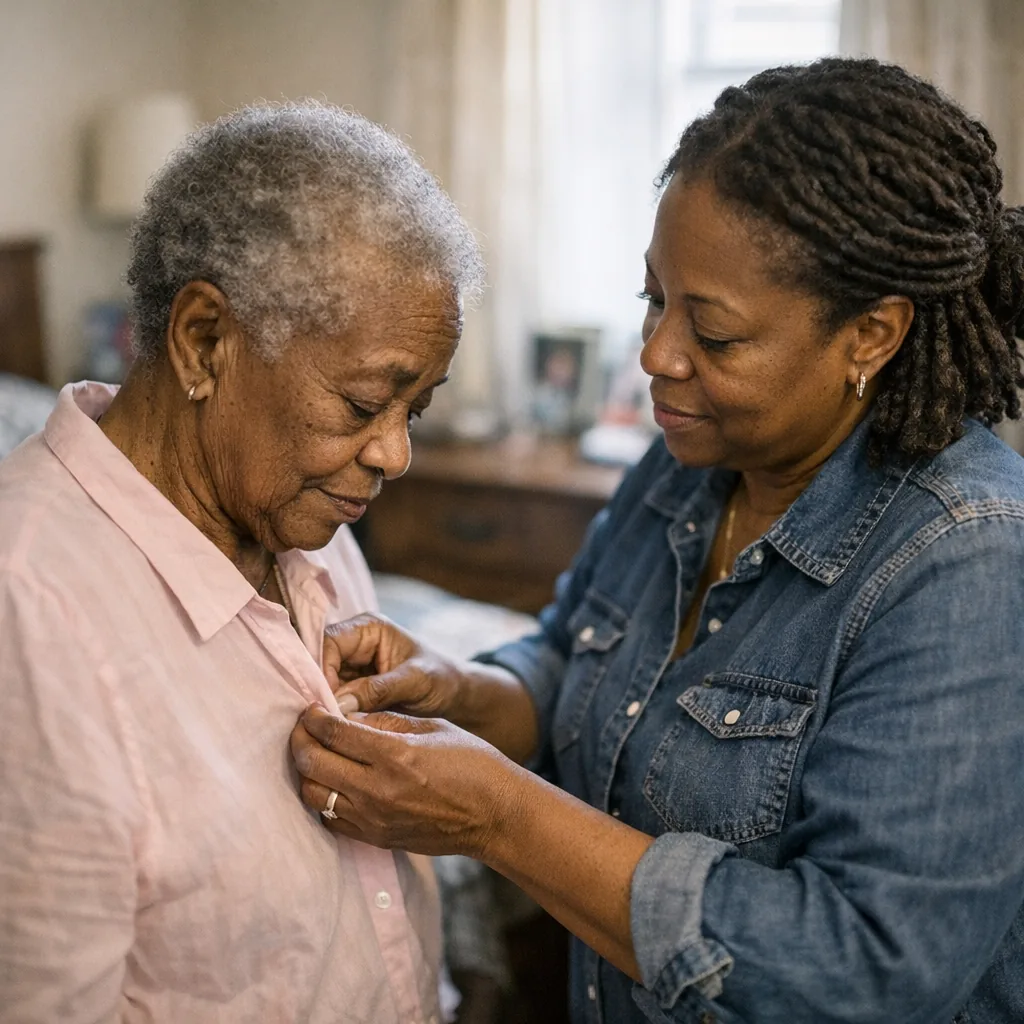
You have been caring for your mother for two years. You are already changing dressings, managing medications, driving to dialysis, lifting her in and out of the shower. You took unpaid leave from work last winter when she fractured her hip. Your siblings live in other states. The county social worker mentioned in passing that “there is a Pennsylvania program where family members can be paid for this.” Then she changed the subject. So you went home and Googled it at midnight, and you found a confusing maze of acronyms — CHC, MCO, EVV, OBRA, A&A — and no clear path. This article is the clear path.
Why this option exists, and why most families never hear about it
Pennsylvania has invested heavily in keeping older adults at home rather than in nursing facilities. The cost arithmetic is simple: a year in a Pennsylvania nursing facility runs well over $130,000, while in-home services can cost a fraction of that. The Centers for Medicare & Medicaid Services has supported self-directed and participant-directed services for over two decades through Cash & Counseling and 1915(c) home and community-based waivers (CMS, Self-Directed Services; ACL, Support for caregivers).
The principle is straightforward: the participant chooses who provides their personal care. That can include an adult child or other relative who already knows the person’s history, preferences, and home. Outcomes improve and costs go down compared with rotating strangers.
Most Pennsylvania families never hear about it because the path runs through three different acronyms — CHC, VA, and the agency that employs the caregiver — and no single phone tree explains the whole thing. The seven steps below are the operational walkthrough, the way an experienced intake coordinator at A-Team would walk you through it on the first call.
Quick reference: What you need to know
| Who can be paid | Adult children, grandchildren, siblings, nieces, nephews, in-laws, and most other adult relatives. Spouses are excluded under Medicaid CHC but may qualify under specific VA programs. |
| Funding paths | Medicaid Community HealthChoices (CHC) participant-directed services; VA Aid & Attendance, Veteran-Directed Care, Homemaker/Home Health Aide; private pay. |
| Time to first paycheck | 2–6 weeks if Medicaid CHC is already in place; 4–12 weeks if CHC enrollment must be initiated. |
| Required clearances | PA State Police criminal record check; PA Child Abuse History Clearance; FBI fingerprint check (if you have lived outside PA in the past two years). |
| Required training | Minimum 16 hours of orientation training before paid care begins, then ongoing per PA DHS regulations. |
| Employer of record | A-Team Home Care — you become a W-2 employee with payroll tax withholding, workers’ compensation, and employment record. |
| Phone | (215) 490-9994 — Philadelphia, Bucks, Montgomery, Delaware, and Chester counties. |
Step 1: The inquiry call
Call A-Team Home Care at (215) 490-9994 and ask for the Family Caregiver Program. The intake coordinator captures the basics in 10–15 minutes: who the loved one is, what county they live in, what level of help they need, who the caregiver candidate is (you, a sibling, a niece), and which funding path looks most likely. The call ends with a scheduled in-home assessment, usually within 48 hours.
Documents to gather before the call: the loved one’s photo ID, Medicare card, Medicaid card if any, VA documentation if applicable, hospital discharge summary if recent, current medication list, and the caregiver candidate’s photo ID and Social Security number.
The first call is free and does not commit the family to anything. Many adult children call from the hospital parking lot the day a parent is being discharged. That is fine. The intake coordinator will work backward from the discharge date.
Step 2: Eligibility screening
Within a few business days, A-Team’s intake team confirms which funding path applies. There are three:
Medicaid Community HealthChoices (CHC). The loved one must be enrolled in Pennsylvania Medicaid and in CHC through one of the three managed care organizations: Keystone First Community HealthChoices, UPMC Community HealthChoices, or PA Health & Wellness (PA DHS, Community HealthChoices). The loved one also needs an active service authorization or a pending level-of-care assessment.
U.S. Department of Veterans Affairs. The veteran must be enrolled in VA health care or have an active Aid & Attendance benefit. Programs include Veteran-Directed Care (VDC), Homemaker/Home Health Aide (H/HHA), and Aid & Attendance pension supplement (VA, Homemaker/Home Health Aide Care). See A-Team’s Pennsylvania veterans guide to Aid & Attendance for the VA-specific path.
Private pay. The family agrees on rate and hours directly with A-Team. Private pay is also the bridge while Medicaid is being approved.
If the loved one is not yet on CHC, the family is referred to the PA Independent Enrollment Broker for Medicaid LTSS application support. For Aid & Attendance, the referral goes to the county VA office or the Pennsylvania Department of Military and Veterans Affairs.
Step 3: The RN in-home assessment
A registered nurse from A-Team visits the home. The visit takes 60–90 minutes. The RN documents activities of daily living (bathing, dressing, toileting, transfers, eating, continence), instrumental activities of daily living (medication management, meal preparation, transportation, finances), mobility, cognition, medical conditions, medications, fall risk, skin integrity, and home safety. The RN meets the prospective family caregiver and evaluates the home environment.
The output is a written plan of care with hours and tasks. This step is non-negotiable. PA-licensed home care agencies must operate on an RN-developed plan of care; the family caregiver works to that plan. The plan is updated every 60 days, or sooner when conditions change — a hospitalization, a fall, a new diagnosis.
The assessment is free and creates no obligation. Many families use the visit as a second opinion on the loved one’s care needs even before deciding on the program.
Step 4: Caregiver hiring and Pennsylvania background checks
The candidate becomes a W-2 employee of A-Team Home Care — not a 1099, not under the table. Pennsylvania law requires three clearances before any direct care worker can begin paid work:
- Pennsylvania State Police criminal record check (Act 153 / Older Adult Protective Services Act). Background check submitted through the PSP epatch system.
- Pennsylvania Child Abuse History Clearance issued by the Department of Human Services.
- FBI fingerprint check — required if the caregiver has lived outside Pennsylvania at any point in the past two years, or has not yet established two years of PA residency.
A-Team initiates the clearances and pays the application fees as part of onboarding. Turnaround is typically 7–14 business days for the state checks; FBI fingerprinting takes a few days longer. While clearances are pending, A-Team can sometimes deploy a non-family caregiver to bridge coverage so that the loved one is not without help.
The Centers for Disease Control and Prevention publishes guidance on safe direct-care worker practices and infection control (cdc.gov). A-Team’s training (Step 5) integrates current CDC guidance.
Step 5: Training and orientation
Pennsylvania requires a minimum of 16 hours of orientation training before a direct-care worker provides paid care, plus ongoing in-service training each year. A-Team’s training covers transfers and body mechanics, infection control, dementia behaviors, medication safety and assistance, emergency response, fall prevention, pressure injury prevention, HIPAA, mandated reporting, and recognizing subtle decline. Format is hybrid online and in-person.
This step often surprises adult children. You have been doing this for years. You know your mother’s routine better than anyone. You may resent being told you need 16 hours of training. The honest answer is that the training is required regardless — but it is also genuinely useful. The infection-control content alone has prevented more than one urinary tract infection in clients of A-Team’s caregivers. The body-mechanics module prevents the back injuries that take family caregivers out of work for months. The dementia behavior module teaches techniques that you can use the same evening you finish the class.
Step 6: Authorization and start date
For Medicaid CHC clients, authorized hours come from the managed care organization’s service plan, built from the RN’s assessment and the MCO’s clinical review. Hours are typically expressed as a weekly budget. For VA clients, authorization comes from VA Geriatrics (Homemaker/Home Health Aide), the Veteran-Directed Care budget, or the Aid & Attendance pension benefit. For private pay, the family and A-Team agree on schedule and rate in writing.
A-Team’s scheduler then sets the start date. Once all clearances and training are complete, the start date is typically within a week. For families bridging from a recent hospital discharge, A-Team coordinates with the hospital case manager so coverage begins on or near the day the loved one comes home.
Step 7: First shift and first paycheck
On the first shift, the family caregiver follows the RN’s plan of care and logs hours through A-Team’s electronic visit verification system. EVV is a Pennsylvania Medicaid requirement under the federal 21st Century Cures Act for all personal care services. The caregiver clocks in and out using a phone-based EVV app at the loved one’s home.
The first paycheck arrives on the next regular pay cycle — typically within two weeks. A-Team handles federal and state tax withholding, W-2 issuance at year-end, payroll tax filings, workers’ compensation, and unemployment insurance contributions. Direct deposit is standard.
From there, the caregiver continues on a regular schedule. The RN reassesses the plan of care at minimum every 60 days, or sooner if conditions change. Authorized hours can be increased through the MCO (Medicaid) or the VA program when needs grow. Paid time off, supplemental hours from a non-family A-Team caregiver, and respite coverage are all options on the table.
How A-Team Home Care administers the program
A-Team Home Care is a Pennsylvania-licensed, ACHC-accredited home care agency contracted with all three Community HealthChoices managed care organizations. We administer paid family caregiver arrangements across Philadelphia, Bucks, Montgomery, Delaware, and Chester counties. We handle clearances, training, payroll, taxes, workers’ compensation, RN supervision, electronic visit verification, and ongoing care plan updates. The family caregiver is a W-2 employee with full agency support — never working alone, never wondering whether a clinical question has a right answer somewhere.
Related A-Team services that often run alongside the Family Caregiver Program: respite care when the family caregiver needs a break, personal care for hours the family member cannot cover, 24-hour home care when needs increase, and career paths for family caregivers who want to continue with A-Team after a loved one no longer needs care.
For the program-level overview and eligibility tables, see the companion article on the Family Caregiver Program. For the broader Pennsylvania paid-family-caregiver landscape and FAQ, see how to get paid to care for a family member in Pennsylvania.
Key entities, resources, and topic information
- Family caregiver — relative providing in-home care for a loved one (Wikipedia).
- Pennsylvania Community HealthChoices (CHC) — PA’s managed long-term services and supports program for older adults and people with physical disabilities (PA DHS).
- Medicaid — U.S. social health-care program; the funder behind CHC participant-directed services (Wikipedia).
- Aid & Attendance — VA pension supplement for veterans who need help with activities of daily living (VA).
- Direct care worker — the regulatory category that family caregivers fit into when paid through CHC.
- Electronic Visit Verification (EVV) — Cures Act requirement for clocking shifts at the participant’s home.
- Service area: Philadelphia, Bucks, Montgomery, Delaware, and Chester counties.
- Typical timeline: 2–6 weeks from inquiry to first paycheck when Medicaid CHC is already in place.
- Pay structure: Hourly W-2 wages, biweekly direct deposit, withholding for federal and state tax, workers’ compensation included.
- Required training: 16+ hours of orientation; ongoing in-service training each year.
- Background checks: PA State Police, PA Child Abuse History Clearance, and FBI fingerprint (if outside PA in past 2 years).
- Authorization source: CHC managed care organization for Medicaid, VA Geriatrics or Aid & Attendance budget for veterans, or written agreement for private pay.
Watch: A-Team Home Care
Frequently asked questions
Can I be paid to care for my spouse?
In Pennsylvania, spouses can be paid as direct-care workers under VA Veteran-Directed Care and certain Aid & Attendance arrangements. Spouses are generally not eligible to be paid through Medicaid CHC self-directed services in PA — that program excludes spouses under federal Medicaid rules. Adult children, grandchildren, siblings, nieces, nephews, in-laws, and most other adult relatives are typically eligible.
How much does a paid family caregiver earn?
The hourly rate depends on the funding source. Medicaid CHC rates are set by the managed care organization and the state and vary by region and service category. VA program rates are set by the VA. Private-pay rates are agreed between the family and A-Team Home Care. Confirm the current rate at the inquiry call — A-Team’s care coordinators provide specific rates after the assessment, so the family knows the actual paycheck math before committing.
Can I keep my regular job and still be a paid family caregiver?
Yes. Many adult children combine part-time paid caregiving with a full-time job. Hours are scheduled around the parent’s needs and the caregiver’s other commitments. The total weekly authorized hours are limited by the MCO or VA service plan, so paid caregiving on Medicaid is rarely a full-time income on its own; private pay and VA Aid & Attendance can support more hours. A-Team often layers a paid family caregiver with a non-family caregiver who covers the hours the family member cannot work.
What if my parent is not yet on Medicaid?
If the parent is income- and asset-eligible but not yet enrolled, the family applies for Pennsylvania Medicaid and selects a Community HealthChoices managed care organization. The MCO is then asked to authorize a level-of-care assessment. The full process typically takes 30–90 days. An elder-law attorney can help with asset-protection planning, particularly for families who own a home or have retirement assets. A-Team’s intake coordinators help families navigate the application and bridge with private-pay coverage during the gap.
What happens if my loved one is hospitalized?
Paid hours pause during a hospital stay because the loved one is receiving care from the hospital, not the home caregiver. When the loved one returns home, A-Team restarts hours and updates the plan of care based on the hospital discharge summary. For long stays, the agency may need to re-authorize hours through the MCO or VA. The family caregiver does not lose status as an A-Team employee — the employment relationship continues.
What if I disagree with the care plan?
The RN works with the family to develop the plan in the first place. If the family caregiver thinks more or fewer hours are needed, raise it with the RN at any time. The plan is updated based on documented clinical and functional needs. For Medicaid clients, the MCO is the final arbiter on authorized hours; the family can appeal an MCO decision through the established grievance and appeals process. A-Team’s RN team participates in the appeals when clinical evidence supports more hours.
Will being a paid family caregiver affect my own taxes or benefits?
The paychecks are W-2 wages, so they are taxable income with federal and state withholding. They count toward Social Security work credits, which is positive for the caregiver’s own retirement. Workers’ compensation covers on-the-job injury, and unemployment insurance contributions are made. Consult a tax preparer if you have questions about the specifics for your situation, particularly if you are also collecting Social Security or have other employment.
How do I start the inquiry?
Call A-Team Home Care at (215) 490-9994 and ask for the Family Caregiver Program. The intake coordinator will schedule the eligibility conversation and the in-home RN assessment. Have the loved one’s insurance cards, basic medical history, and the prospective caregiver’s contact information ready when you call. The first call is free and does not commit the family to anything.
Sources & further reading
- Centers for Medicare & Medicaid Services — Self-Directed Services
- Centers for Medicare & Medicaid Services — Electronic Visit Verification (EVV)
- Administration for Community Living — Support for caregivers
- Pennsylvania DHS — Community HealthChoices
- Pennsylvania Department of Aging — aging.pa.gov
- U.S. Department of Veterans Affairs — Homemaker / Home Health Aide Care
- A-Team Home Care — Family Caregiver Program overview
- A-Team Home Care — How to get paid to care for a family member in PA
- A-Team Home Care — Respite care · Personal care · 24-hour home care · Careers
Disclaimer
This guide is general educational information and is not legal, financial, tax, or benefits-eligibility advice. Eligibility rules, authorization criteria, and rates change. Verify with the relevant Pennsylvania Community HealthChoices managed care organization, the U.S. Department of Veterans Affairs, or an elder-law attorney. A-Team Home Care is an ACHC-accredited home care agency serving Pennsylvania.
Contact us
Ready to start the inquiry, or just have questions about the Family Caregiver Program in Pennsylvania? A-Team Home Care’s care coordinators answer the phone and respond to forms within one business day. The first conversation is free and creates no obligation.
By submitting, you agree A-Team Home Care may contact you about home care services. We do not sell your information.
Follow A-Team on Instagram
Real moments from real shifts — caregivers, clients, milestones, team events. @ateamhomecare · updated weekly.